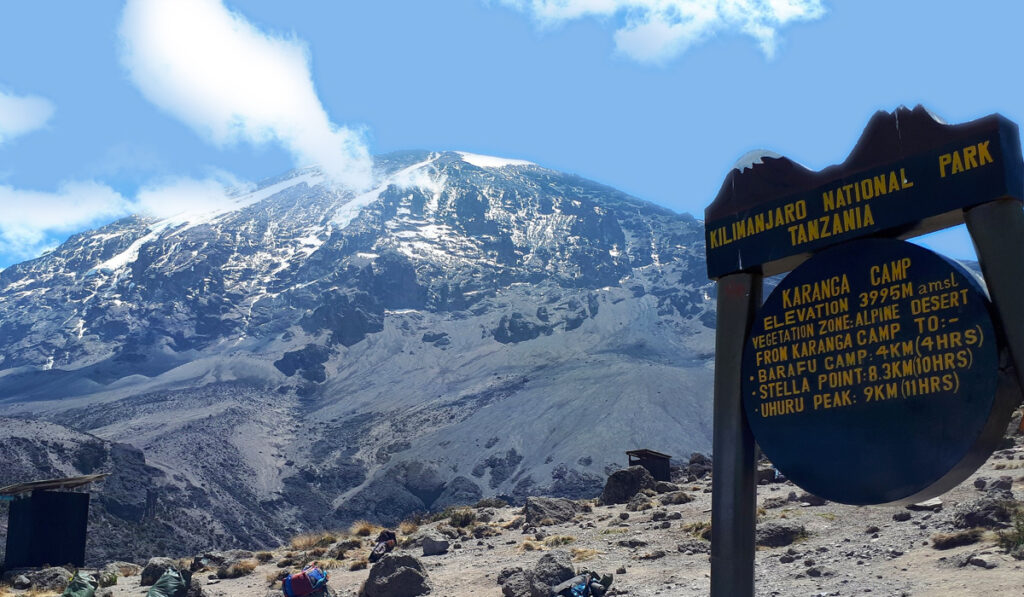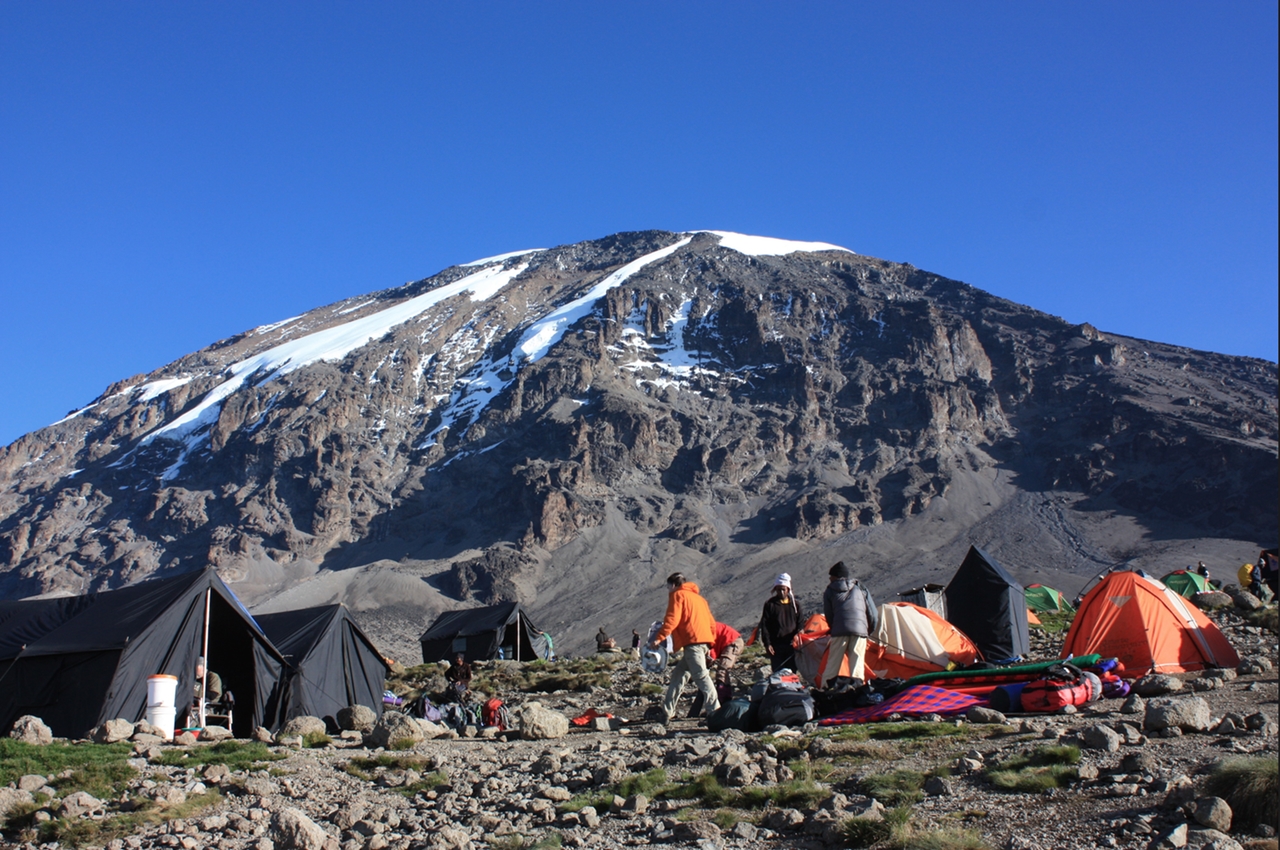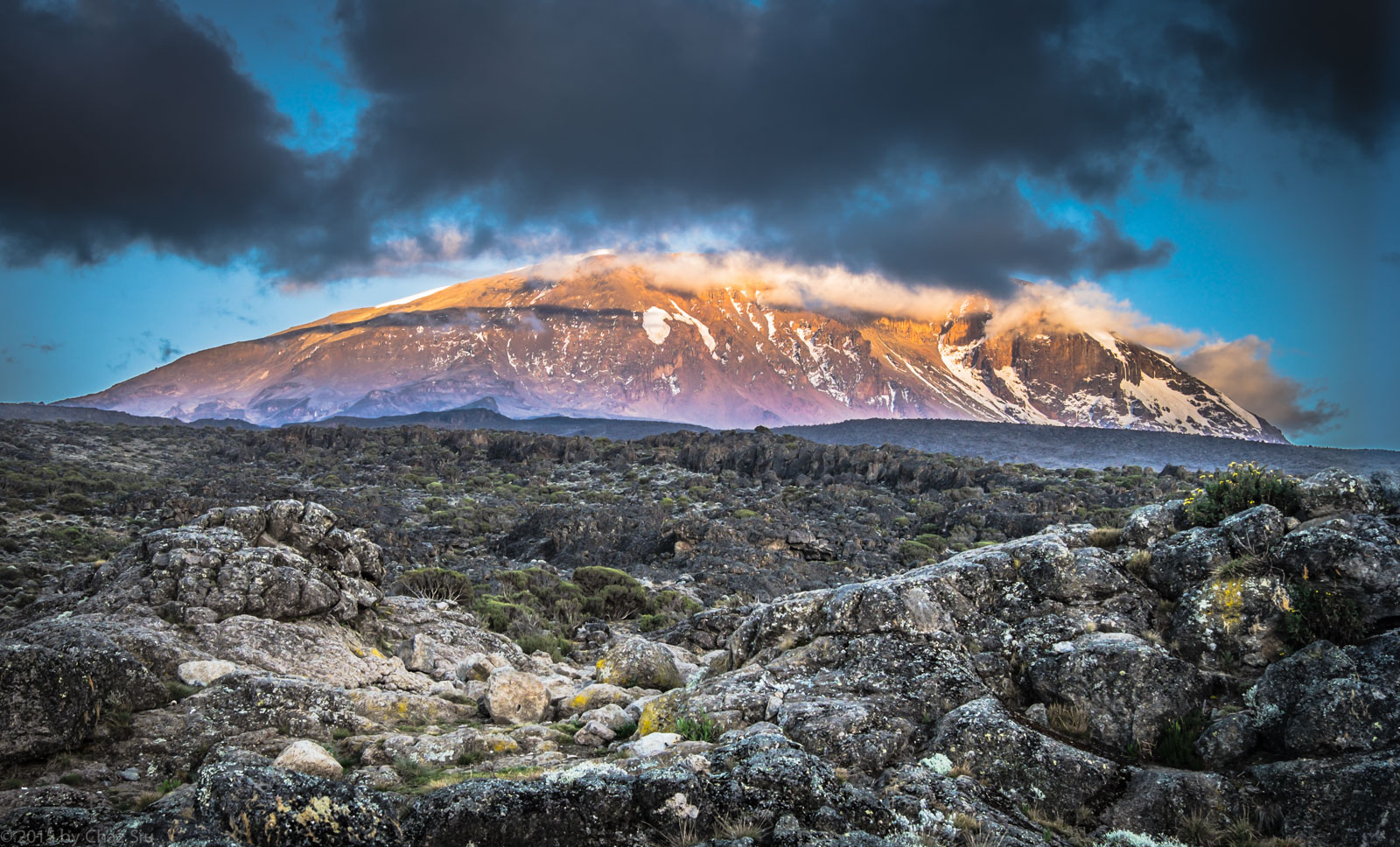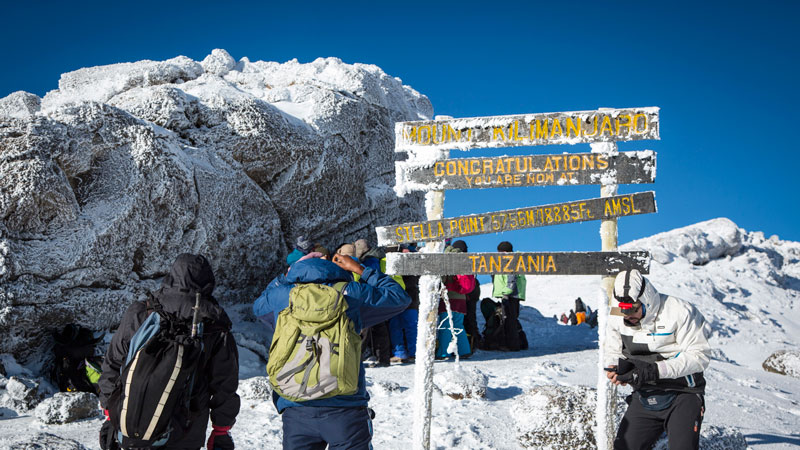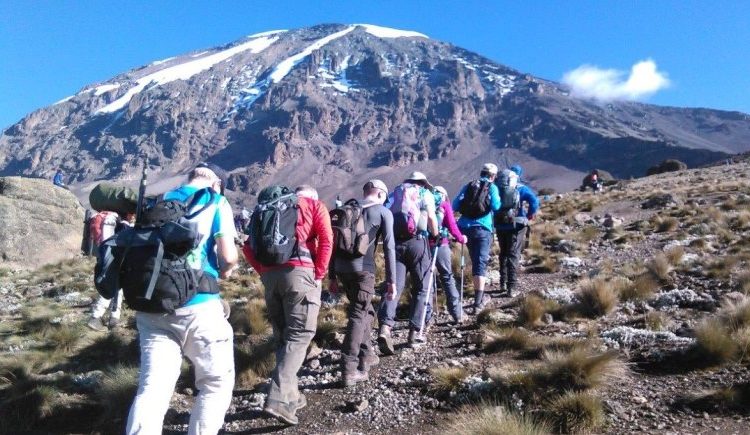

The 6-day Marangu Route is the most recommended option for climbing Mount Kilimanjaro via this trail. By including an additional acclimatization day at Horombo Hut, this itinerary allows the body to adjust gradually to increasing altitude.
This slower approach significantly improves summit success rates and reduces the risk of altitude sickness. It also provides a more enjoyable trekking experience, allowing climbers to explore the surrounding landscapes and conserve energy for summit night.
This itinerary is ideal for beginners, first-time high-altitude trekkers, and anyone seeking a safer and more comfortable climb.
Day 1: Marangu Gate (1,870m) to Mandara Hut (2,700m)
Distance: 8 km
Hiking Time: 4–5 hours
Habitat: Rainforest
The trek begins with a steady hike through lush rainforest. The trail is scenic and relatively gentle, offering a relaxed introduction to the climb.
Wildlife sightings are common, and the dense canopy provides shade. After reaching Mandara Hut, climbers can relax or explore nearby viewpoints.
Overnight: Mandara Hut
Day 2: Mandara Hut (2,700m) to Horombo Hut (3,720m)
Distance: 12 km
Hiking Time: 6–7 hours
Habitat: Moorland
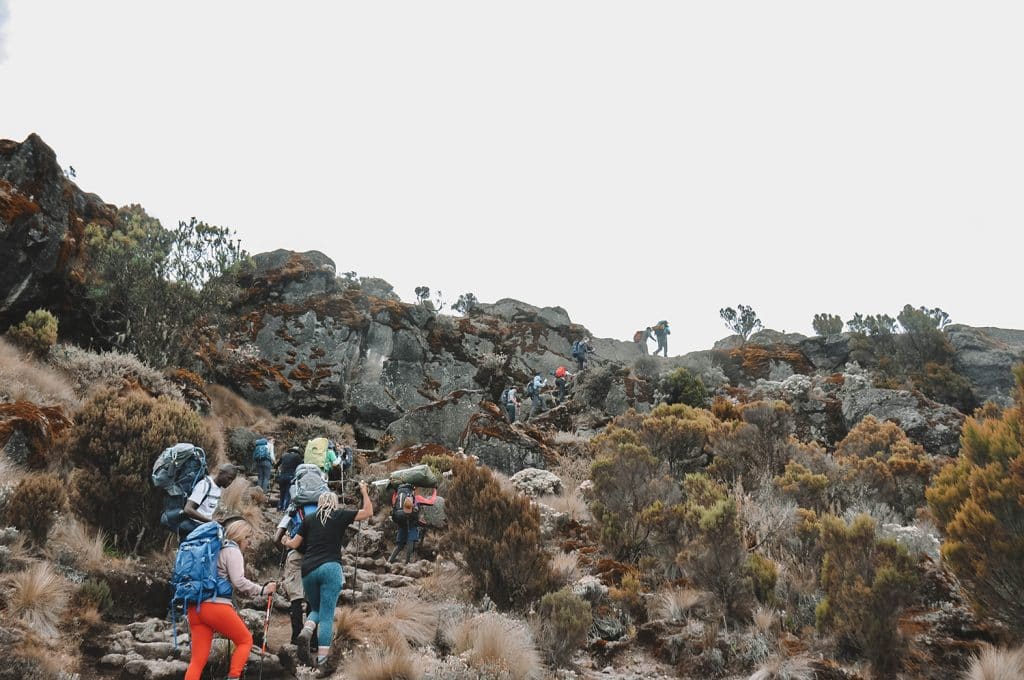
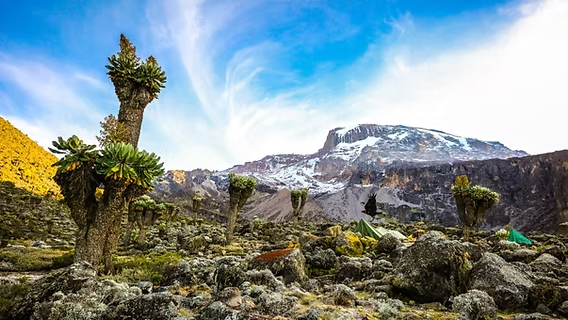
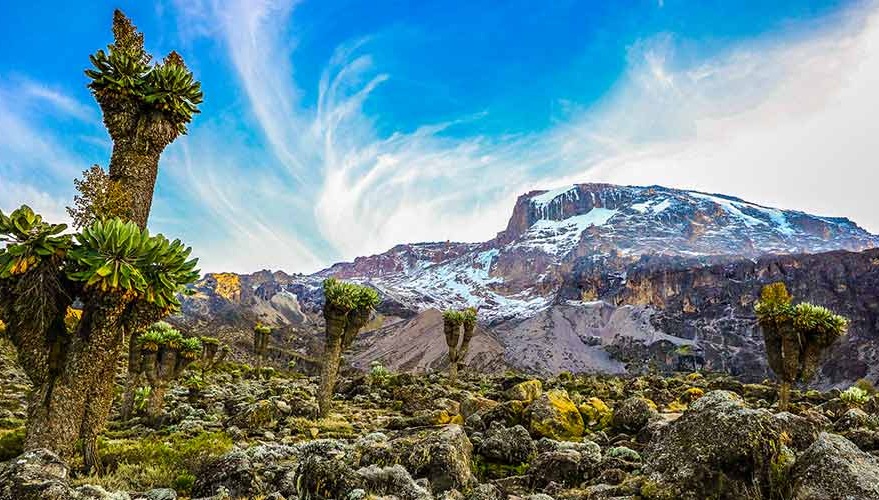
The trail ascends out of the forest into open moorland. Vegetation becomes sparse and the environment cooler.
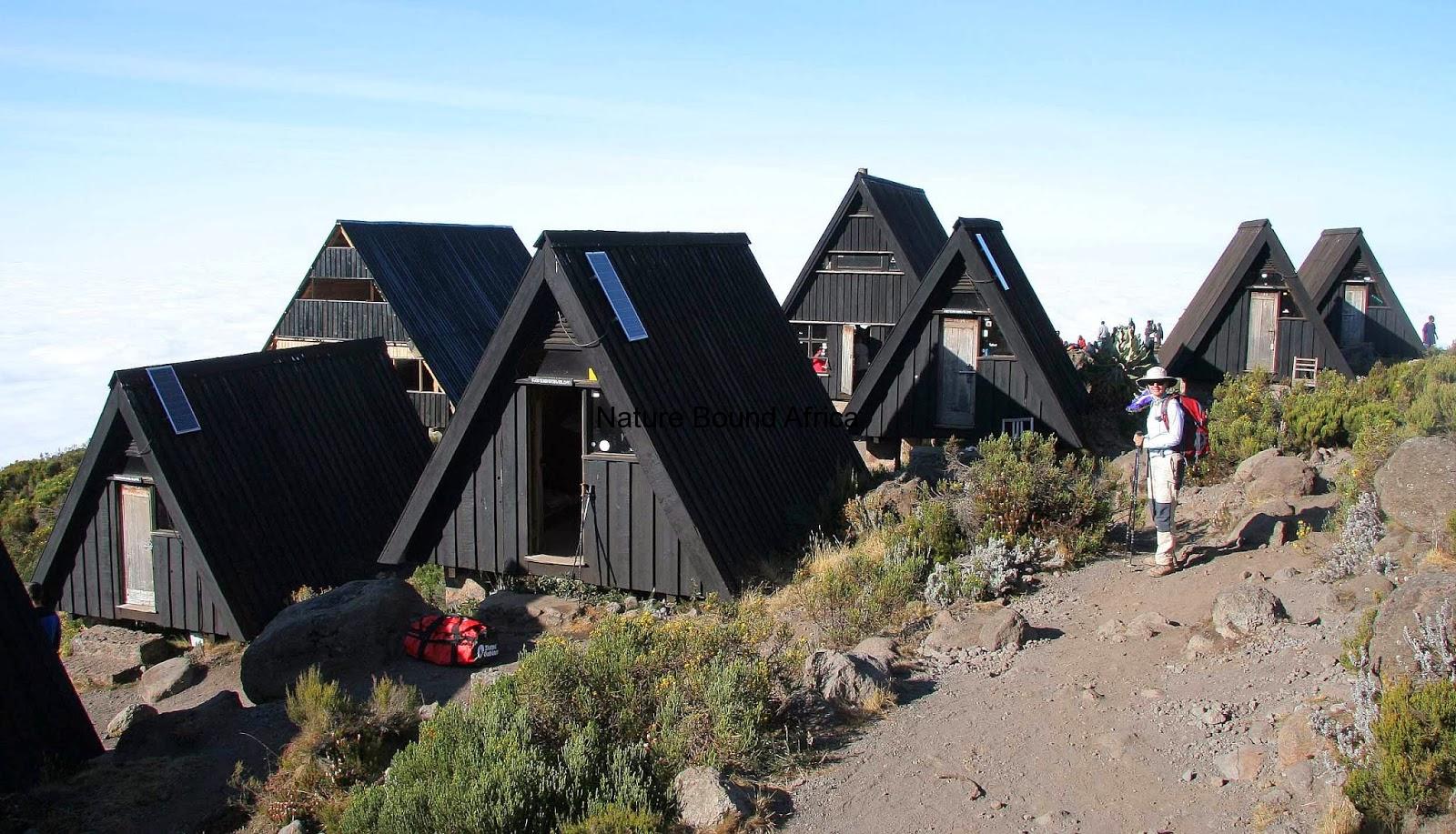
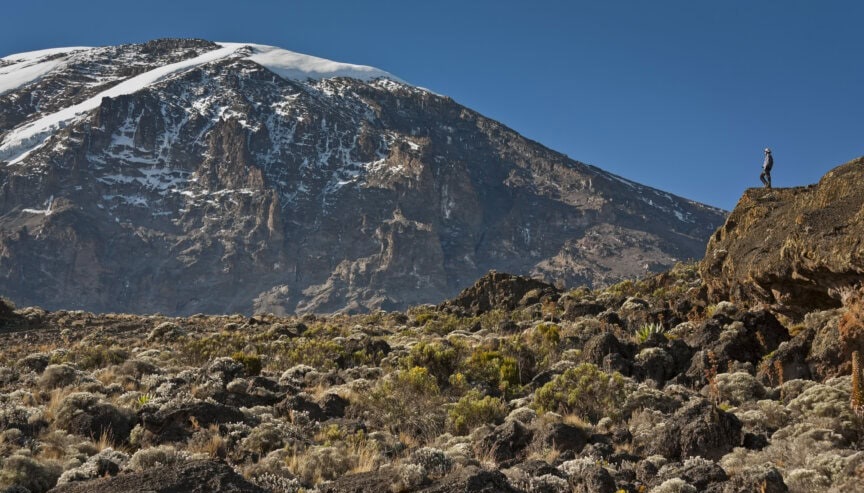
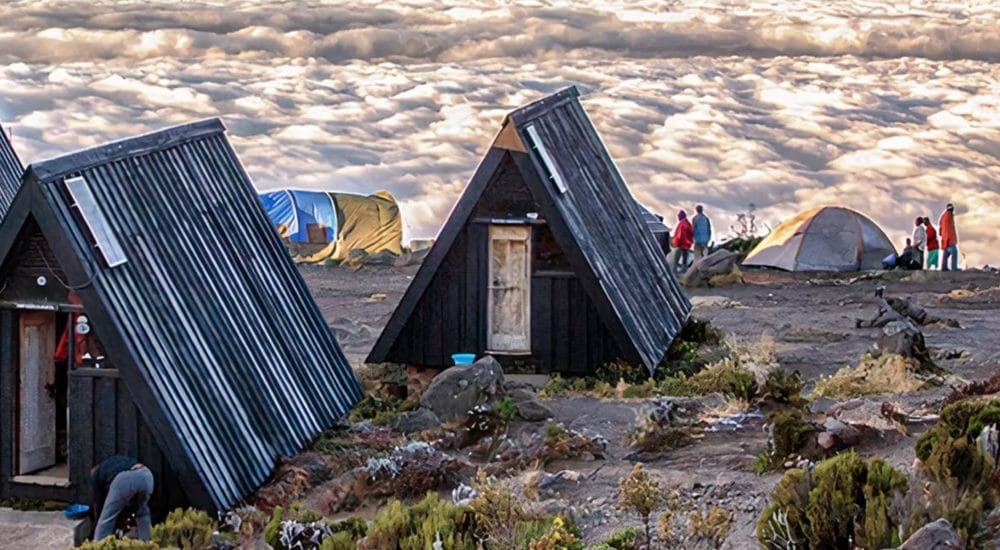
The views expand dramatically, with Kibo and Mawenzi peaks visible. Upon arrival at Horombo Hut, climbers begin to feel the effects of altitude.
Overnight: Horombo Hut
Day 3: Horombo Hut (3,720m) – Acclimatization Day
Distance: 5–6 km (optional hike)
Hiking Time: 4–5 hours
Habitat: Moorland / High-altitude zone
This is a crucial day for acclimatization. Climbers take a short hike toward Mawenzi Ridge, reaching higher altitude before returning to Horombo Hut.
This “climb high, sleep low” strategy helps the body adapt to reduced oxygen levels. The extra day also allows for rest, hydration, and recovery.
Overnight: Horombo Hut
Day 4: Horombo Hut (3,720m) to Kibo Hut (4,700m)
Distance: 10 km
Hiking Time: 5–6 hours
Habitat: Alpine desert
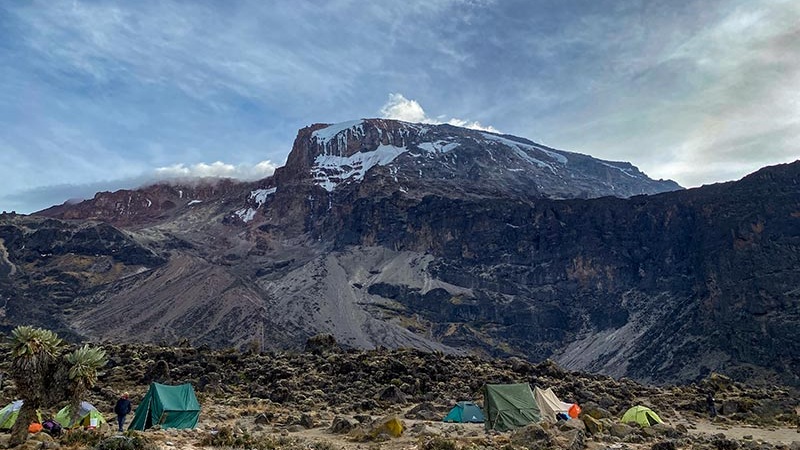
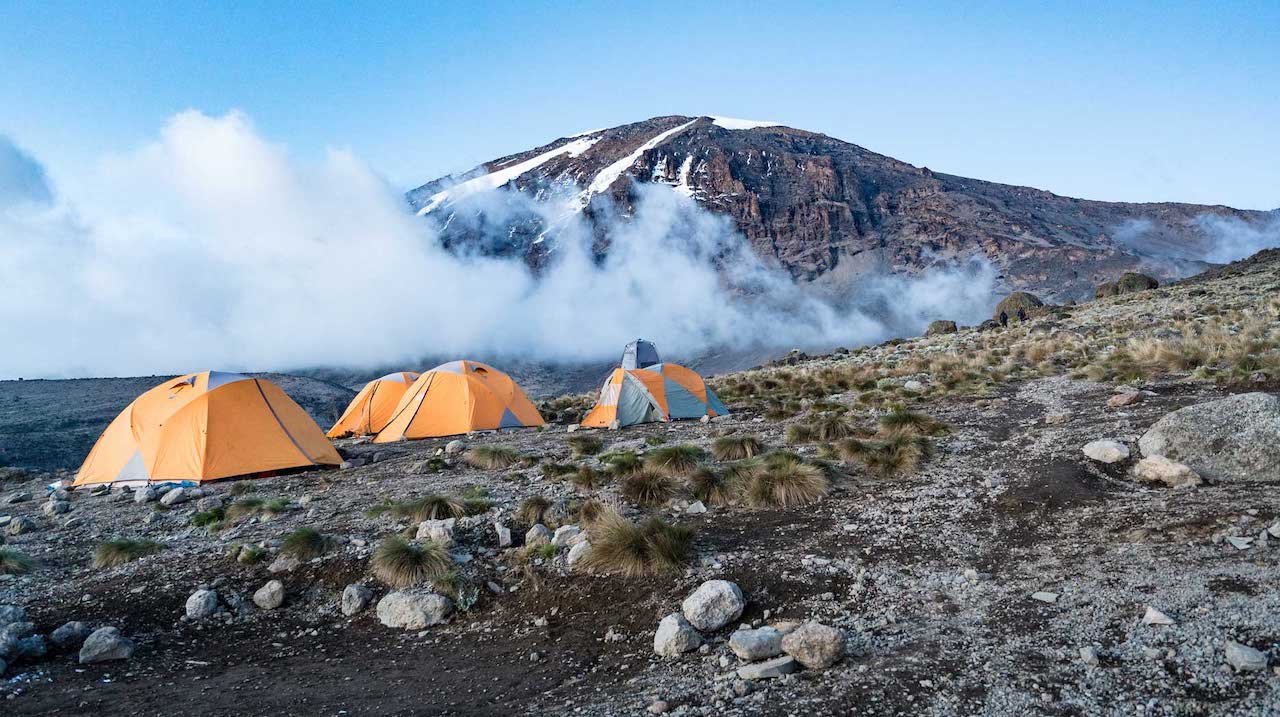
The trek continues across the saddle between Mawenzi and Kibo. The landscape is dry, rocky, and exposed.
The gradual ascent allows climbers to maintain a steady pace. Arrival at Kibo Hut is followed by rest and preparation for the summit climb.
Overnight: Kibo Hut
Day 5: Kibo Hut → Uhuru Peak (5,895m) → Horombo Hut
Distance: 22 km (round trip)
Hiking Time: 10–14 hours
Habitat: Arctic → Moorland
The summit attempt begins at midnight. Climbers ascend slowly in cold, thin air toward the crater rim and finally Uhuru Peak.
After reaching the summit, the descent begins back to Kibo Hut, followed by continued descent to Horombo Hut.
Despite being physically demanding, climbers are better prepared due to acclimatization.
Overnight: Horombo Hut
Day 6: Horombo Hut (3,720m) to Marangu Gate (1,870m)
Distance: 20 km
Hiking Time: 5–6 hours
Habitat: Moorland → Rainforest
The final descent retraces the trail through moorland and back into the rainforest.
The increased oxygen and warmer temperatures make the walk more comfortable. At Marangu Gate, climbers receive certificates and celebrate completing the journey to the summit of Kilimanjaro.
Significantly higher summit success rate
Better acclimatization and safety
Reduced risk of altitude sickness
More enjoyable and less rushed experience
Ideal for beginners and most climbers